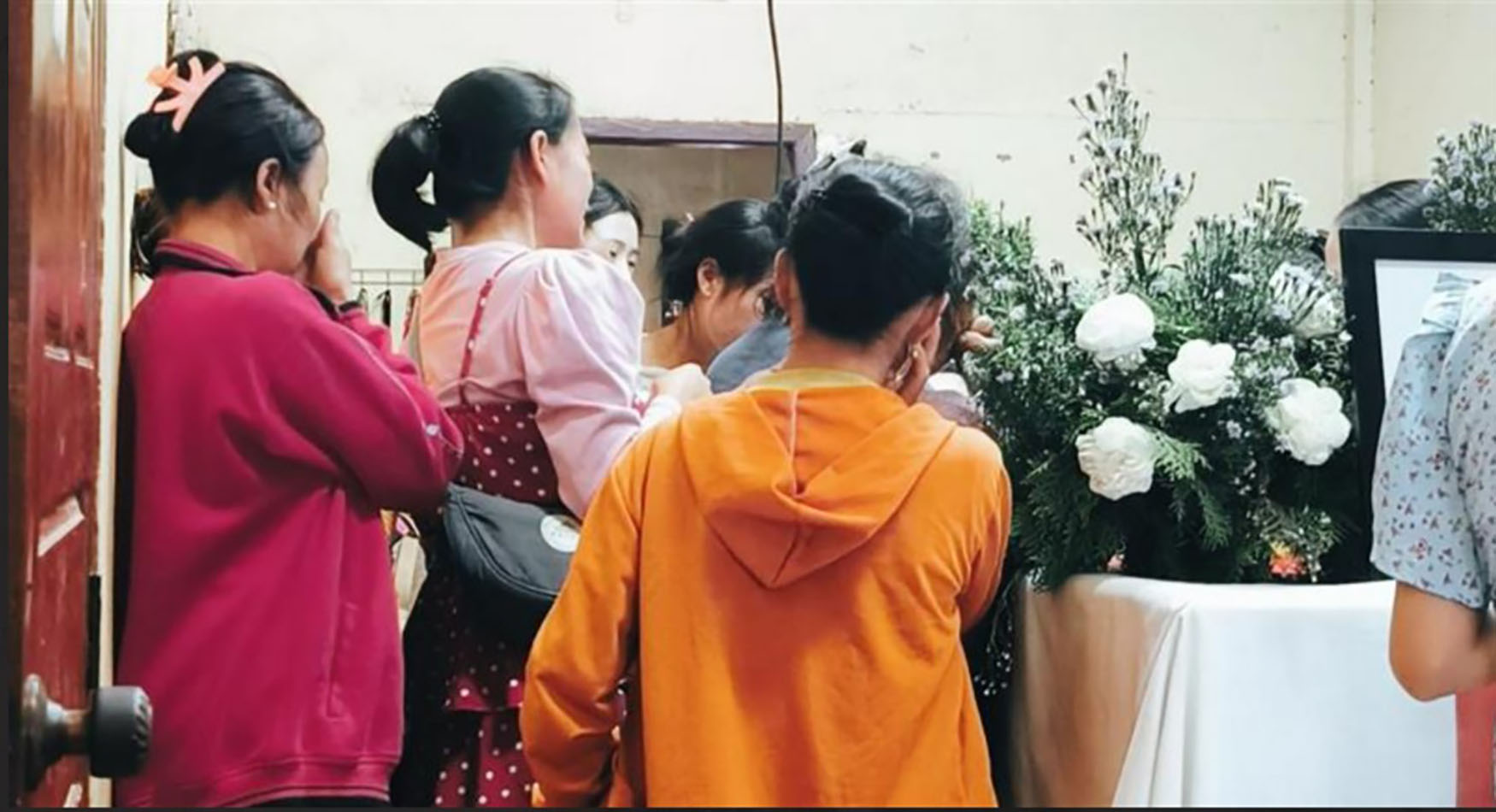
Kanya*’s church is underground and illegal.
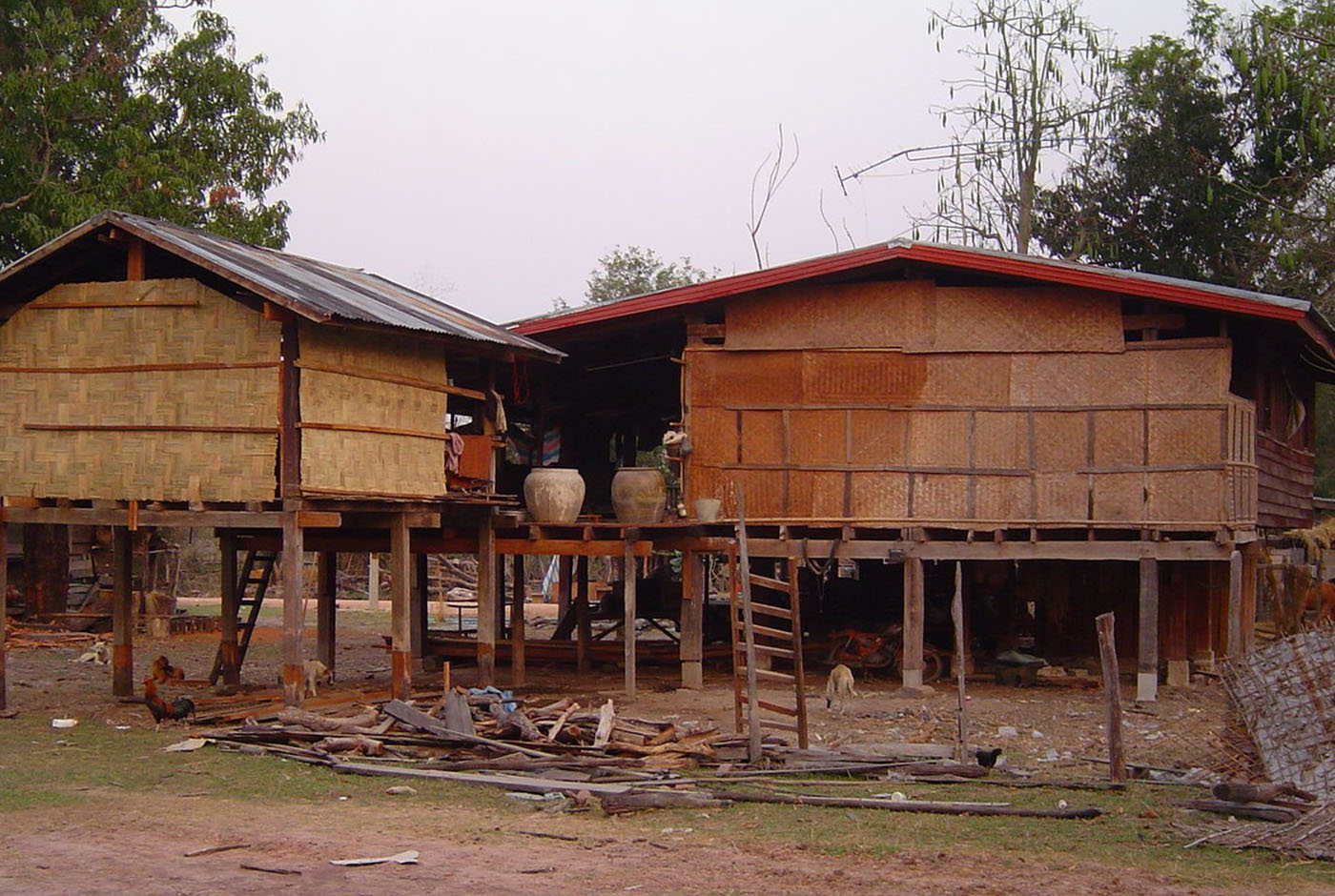
You wouldn’t even know it’s a church. It’s just a tiny space that’s part of a small hut. The roof is a plastic
tarp. There’s no plumbing or electricity.
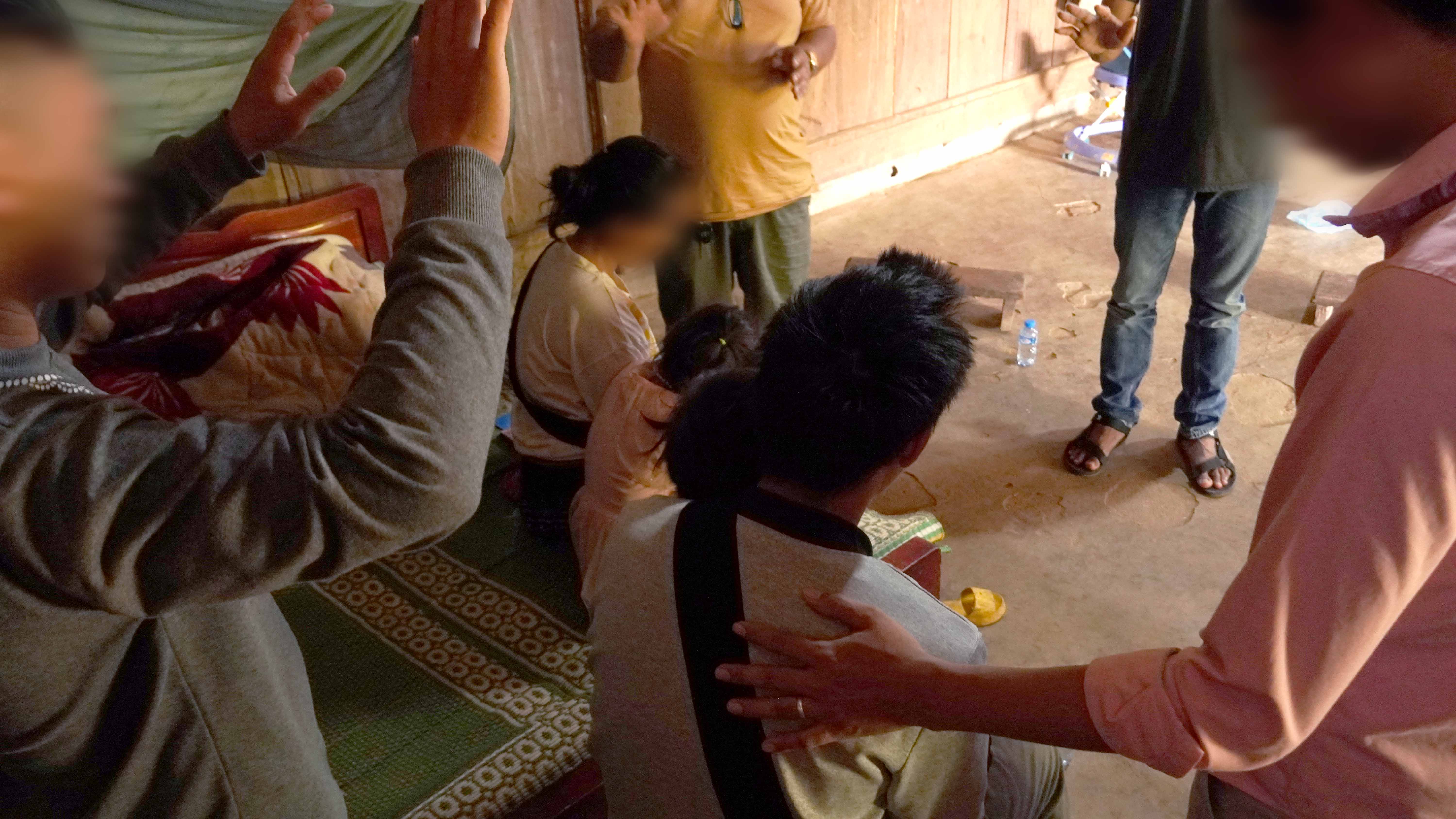
The home where the church meets is on land owned by the government—the same government that could shut down the church at any moment for being an unregistered church. The small congregation gathers each week, worshiping underground and under pressure.
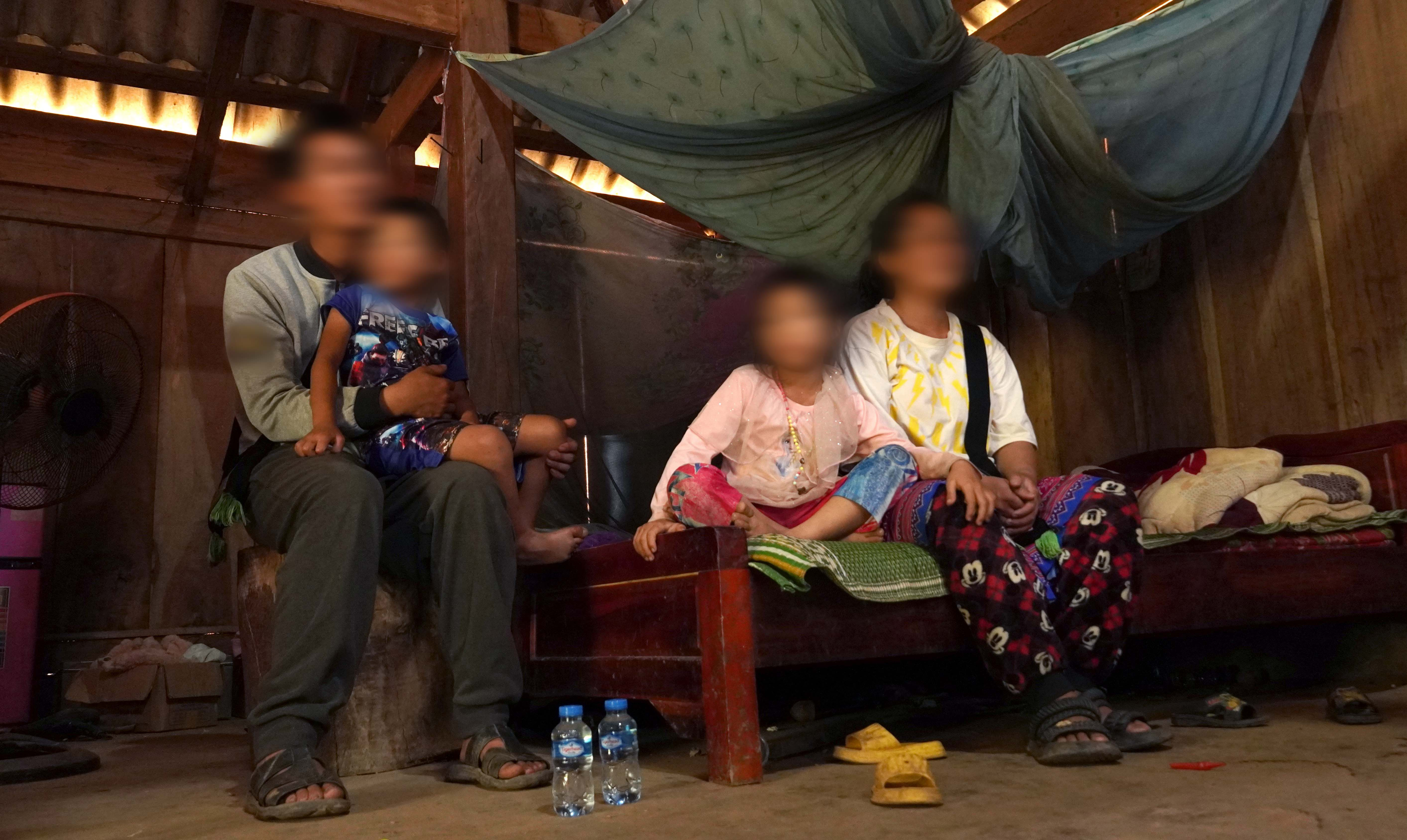
Kanya and her husband, Phonesay*, live in another nearby hut, squeezing their family of six into a small structure with no basic infrastructure. Their hut is just one of several on this small piece of land; each belongs to a Christian family like Kanya’s.
But Kanya and her husband know it could be worse. They know what could happen if the surrounding
community and authorities decide to shut down or even demolish their church.
They know because it has happened before.
‘If you believe … He can help you’
Kanya and Phonesay are from rural Laos, ranked No 28 on Open Doors’ 2026 World Watch List, the annual ranking of the 50 places where it’s most difficult to follow Jesus. Their community is deeply connected to an animist belief system in which people believe that almost everything—both living and non-living—possesses a spirit. For them, angering or refusing to appease spirits is disastrous. The belief system is so tied to the tribal identity that to believe anything else can seem like turning your back on your heritage and your community.
The couple were raised in this belief system and never had much reason to doubt. And then Kanya fell ill with severe dental issues.
Nothing was working to help her and because the couple was poor, they couldn’t afford the pig or chicken needed for an offering to the spirits. And then, someone told Kanya she could try a different approach. “He told me, ‘If you believe in God, He can help you,’” Kanya remembers.
She and Phonesay decided to give it a try. He encouraged his wife to believe, even promising he would follow her in belief in this new God if she was healed.
God immediately began to work on Kanya’s heart. “The Lord revealed something to me that made me want to follow Him,” she explains. “So I decided to believe. In that moment, I put my faith in God, regained my strength, and was healed—thanks to the Lord.”
Kanya and Phonesay were overjoyed. And Phonesay thought perhaps there would be time to keep his
promise. “I thought, ‘If there is no persecution, I will believe later,’” he says.
But because of where they live in Laos, persecution was a certainty. The first instance came just a few days after Kanya’s conversion. She’d invited her brother, another believer, to come and lead worship for her and other Christians. While he was in their village, the local authorities took his motorbike and refused to give it back.
Even worse, when the Christians went to the police to return the stolen vehicle, the authorities’ list of demands grew. “The officer said, ‘If you don’t recant your faith in Jesus, you must leave. The villagers do not allow you to stay here,’” Kanya recalls.
“I firmly answered that I would not renounce. Even if I die, I will never renounce Jesus.”
Kanya
The pressure increased—and soon spread to Phonesay and his family. “After I believed and was healed, [Phonesay] told me to renounce my faith,” Kanya explains. “However, I confirmed that I would continue with God—even if his family would expel me [from our home]. So, they expelled me. Phonesay’s family told the villagers to pressure me to give up my faith.”
And so, the village decided to expel Kanya from the community.
The villagers gave Phonesay a terrible ultimatum. “They told me, ‘Believe like your wife or leave her … if you don’t divorce, you must leave with her,’” he remembers. “The villagers and my parents said, ‘It’s okay to stay alone. If your wife loves you, she must renounce Jesus and return to animism.’ But she didn’t, so they said, ‘You have to divorce.’”
Phonesay decided he wouldn’t fight for Kanya or their marriage. Kanya was left with no options. “All night long, from 7 p.m. to 4 a.m., they kept me in the house then forced me to leave the village,” Kanya remembers. “So, I fled and stayed with my relatives. During that [time], I didn't feel anything. But I was joyful. My heart sought the Lord. Yes, I missed my children. Every moment I sobbed, I prayed—crying and asking God for help. [But] I was willing to sacrifice my husband and children for my faith.”
Kanya had lost everything but gained Jesus. Would it be enough?
A search for meaning
At the time, Kanya was pregnant with her and Phonesay’s third child. But that didn’t stop her from trying to grow in her new faith, even in a new place with her relatives. “The church I attended was quite far, [but] I did my best to go to church,” she remembers. The church had about 20 believers—two older Christian families and the rest were new Christians, including Kanya’s relatives.
“We actively worshiped the Lord with all our hearts,” Kanya says. “Yes, the number was small, but spiritually it was huge, like a multitude.”
All the while, Kanya was praying to be reunited with her husband and believed they would be reconciled. She regularly shared the gospel with him, asking him to consider accepting Jesus. “Every time we’d have a call, she’d share the gospel with me,” Phonesay remembers. “She said, ‘Believe in Jesus, and we will be free from our old customs and animism.’”
But still Phonesay continued to hesitate, knowing the consequences his wife had already endured for her faith. Instead, he retreated, choosing to abuse drugs and alcohol. “I was never angry at him,” Kanya says. “When I saw him, I felt pity for him.”
For five years, this was the status quo. During this time, Phonesay remarried. “Many people looked down on me and said, ‘You believed in God, but you gained nothing. Your husband has another wife now,’” she says. “I said nothing. I just smiled. I believed we would reconcile because God is great.”
Even when all seemed hopeless, God was still at work on Phonesay’s heart. Phonesay continually felt empty and alone, even with his new wife. The things he had looked to for comfort had let him down. “I didn’t find meaning with that life,” he says. “I wanted a new life.” And slowly but surely, Phonesay’s heart began to soften—until he also accepted Jesus as his Lord.
Ironically, what happened to Kanya now happened to Phonesay: His wife was horrified with his new faith and divorced him.
But by God’s grace, the divorce opened a door for the reconciliation that Kanya had prayed for over years. And so, Kanya and Phonesay remarried, five years after persecution had driven them apart—this time, joined with one another in their pursuit of Jesus.
‘We will demolish the house’
Kanya returned home to the village that was once her home. The family was overjoyed to be reunited. Knowing it was God’s goodness that had allowed it, they planned a worship service as a celebration of their reconciliation and also a public declaration of their faith in Him.
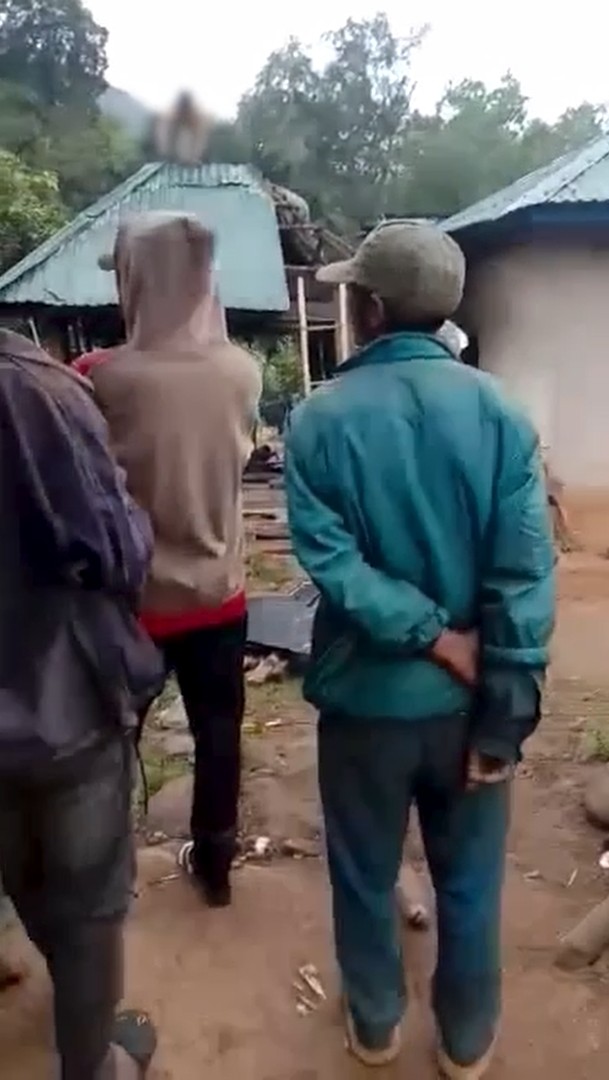
But not everyone in the community was pleased with the couple’s reunion. “Villagers came to the house [and shouted], ‘We will demolish the house now,’” Kanya remembers. “I did nothing wrong, but they wanted to harm us.” The villagers, armed with hammers, began to tear down the home.
Phonesay ran to the police for help. “Villagers have destroyed my house,” he said, but the authorities paid no attention. He returned and began to video the destruction.
“I wasn’t afraid at that time. I just wondered what they would do after destroying the house,” Kanya says. “They acted that way because they don’t know the Lord. If they knew Him, they wouldn’t be angry. The Lord commands us not to repay evil with evil, but to overcome evil with good.”
Kanya sat at a nearby house and watched as her home was destroyed. All she could think to do was pray—and sing. “I sang a song called ‘Thank the Lord. Thank, Jesus,’” she says, reciting some of the lyrics:
“Thank you, Jesus. Hallelujah.
He gives His love, His love.
Thank you, Jesus. Hallelujah.
His mercy is the greatest, greatest.”
In the end, two houses were destroyed—Kanya’s and Phonesay’s and Kanya’s uncle’s house.
After the violence died down, the couple went to the police again. “We reported that the villagers destroyed our house even though we did nothing wrong,” Kanya says. “The police mockingly said, ‘That's right—you didn't listen to [the villagers]. You just do what you want.’”
Eventually, Kanya and Phonesay were also kicked out of their own village. “During our expulsion, I felt happy and sad at the same time,” Phonesay remembers. “Happy because I have joy in God—I believe in Him. Sad because I was born in that village and lived there many years. Being expelled felt like I killed someone.”
Forced out
Eventually, the couple was given an abandoned home while the authorities tried to figure out what to do with them. Months passed, and persecution expanded to surrounding villages as well. Multiple families were expelled from their own communities and sent to live in the abandoned house with Kanya and Phonesay.
The families—now 8 of them in total, including Kanya’s and Phonesay’s—asked their persecutors and the local authorities if they could go to a rural area to find a more permanent place to live. Their request was granted. “[The authorities] said, ‘You have farms—you Jesus people must move there,’” Kanya says.
The area they went to was barely livable—undeveloped land, made up of simple subsistence farms in the middle of the dense forests of Laos. Open Doors partners heard what had happened and were able to help with some basic construction supplies and food, and help clear the land for new huts. But life for the Christian families was not going to be easy.
“I wondered, ‘Is this the Lord’s plan?’” Phonesay reflects. “I thought, ‘His plan is for me to leave my parents and relatives to live in the forest?’ Is that true?”
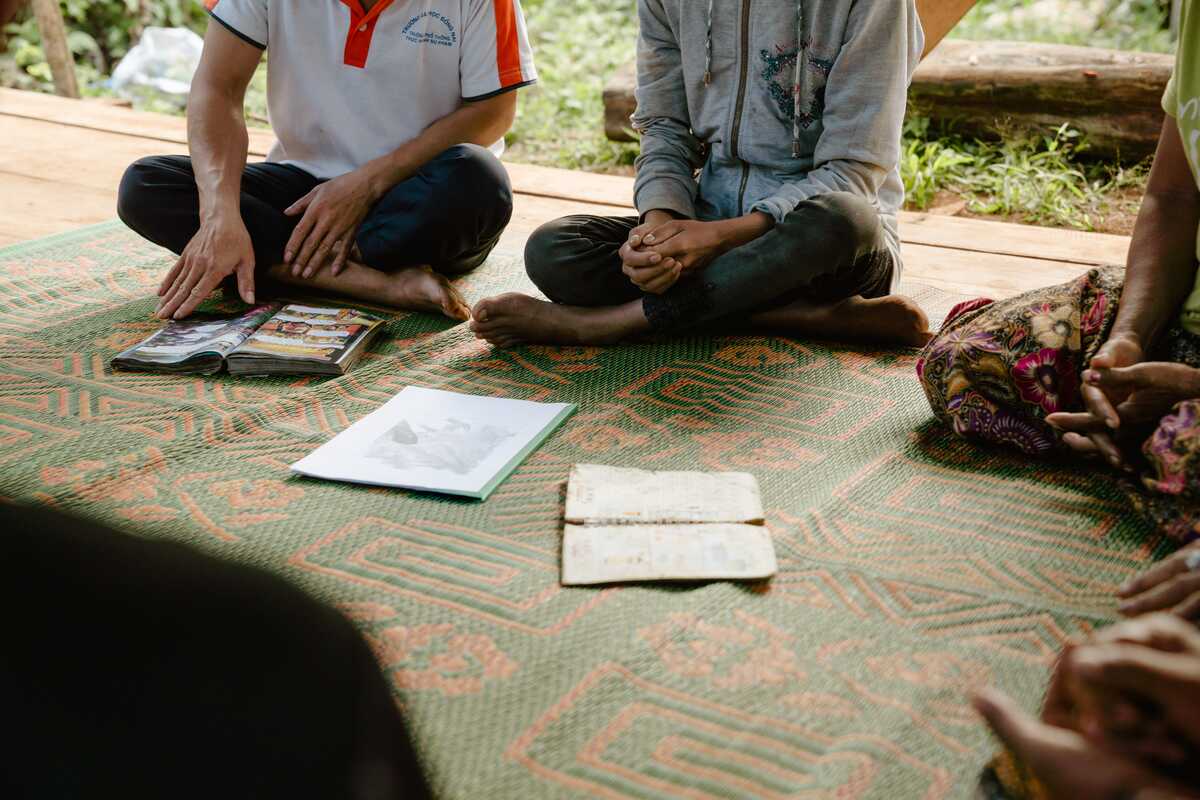
But God was faithful. The new collection of huts in the woods was to be a place where, for the first time, these persecuted Christians could worship freely with one another. “Living in the forest with other believers made me happy because we shared the same faith,” Phonesay says. “The Lord gave us time to worship Him. We worshiped Him every day.”
Kanya is grateful for the help they received from Open Doors partners to build up the small flock. “I thank the Lord—I saw His love through these blessings from our brothers and sisters,” she says.
The small group of believers fashioned a church out of some extra space in one of the huts, and that became their church. The Christians began to grow in faith. “Our leaders brought many lessons to teach in the church,” Phonesay says. “We studied about sharing the gospel, and after studying, we went out to proclaim it.”
Phonesay was given the opportunity to travel to the closest city near them to be trained by Open Doors partners in Bible interpretation and other spiritual areas. These partners also brought persecution preparedness training to the new community to help them stand strong in their situation—and in any coming persecution. “[The] training taught me that we must be patient in persecution,” Phonesay says. “It encouraged me when I faced persecution, reminding me never to renounce my faith.”
Open Doors partners also supported a livelihood project for the believers because they had been forced out of work when villagers expelled them. “It helps me earn income so I can buy other needs like salt and sugar,” Phonesay says of the project. “It supports us whenever we have needs. If the Lord provides, I am thankful. If He doesn’t, I still believe in Him. Thanks to the Lord. May He bless everyone involved in your ministry.”
A fragile existence
This is the current status quo for Phonesay, Kanya and the other believers in this part of Laos. They are all people forced from their homes for their faith, all finding solace in the mountainous forests of Laos. Their lives are not easy, and they hope for more. But at least right now, they have a church and one another.
Yet they know at any moment it could all disappear. “There is another problem—the villagers made a boundary around the land and do not allow us to expand the area,” Kanya says. “This land belongs to the government, but I am not afraid; I just lean on the Lord.”
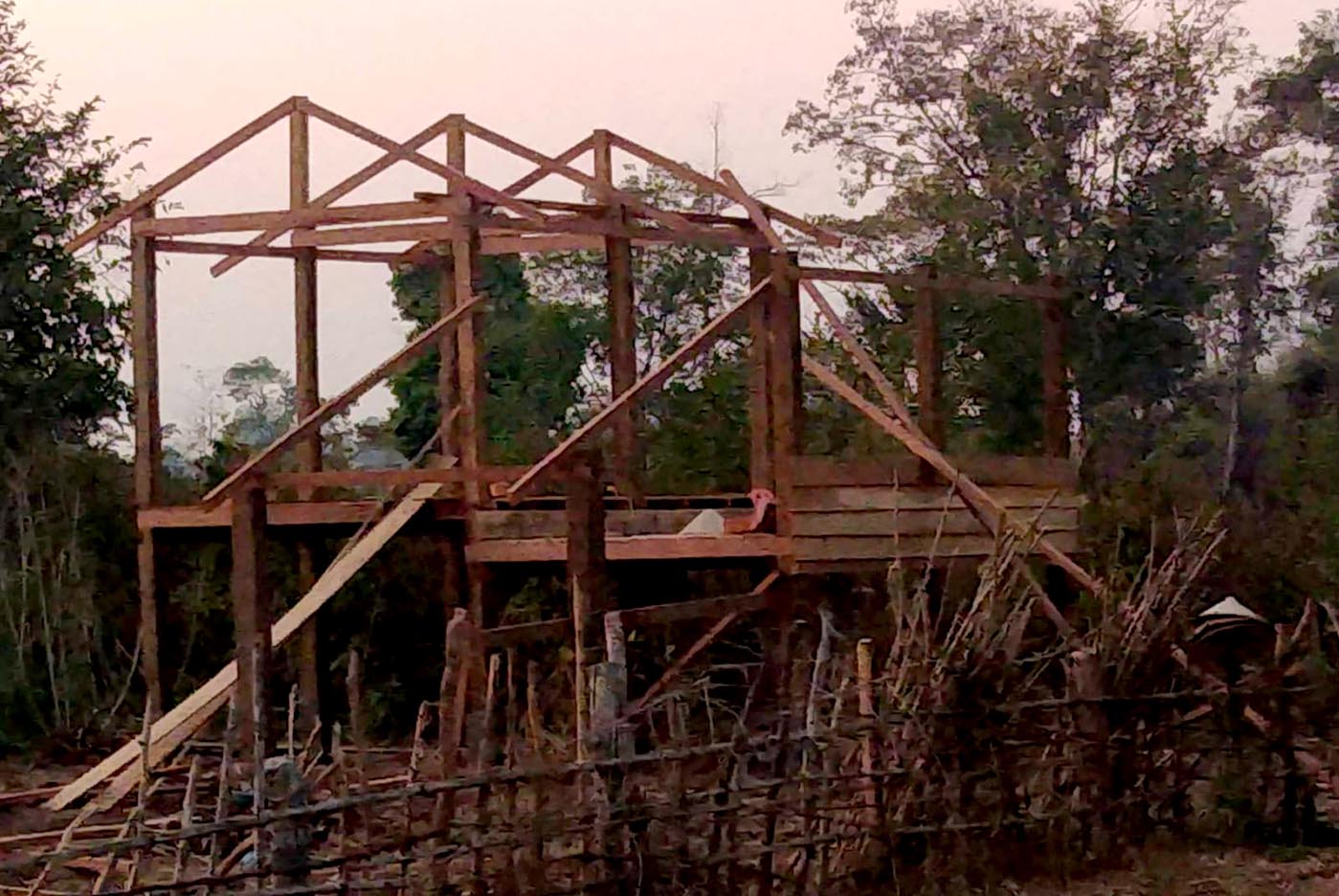
They want to build a larger church—as Kanya says, “the worship place is most important, more than anything else.” But they are fully aware that any complaints from any community could result in the same consequences. They’ve already been warned about sharing their faith outside of the boundaries set around their small clump of huts. Kanya and Phonesay are still deeply marked by their experience of watching their home destroyed because they hosted a worship service. They know that this could easily happen again.
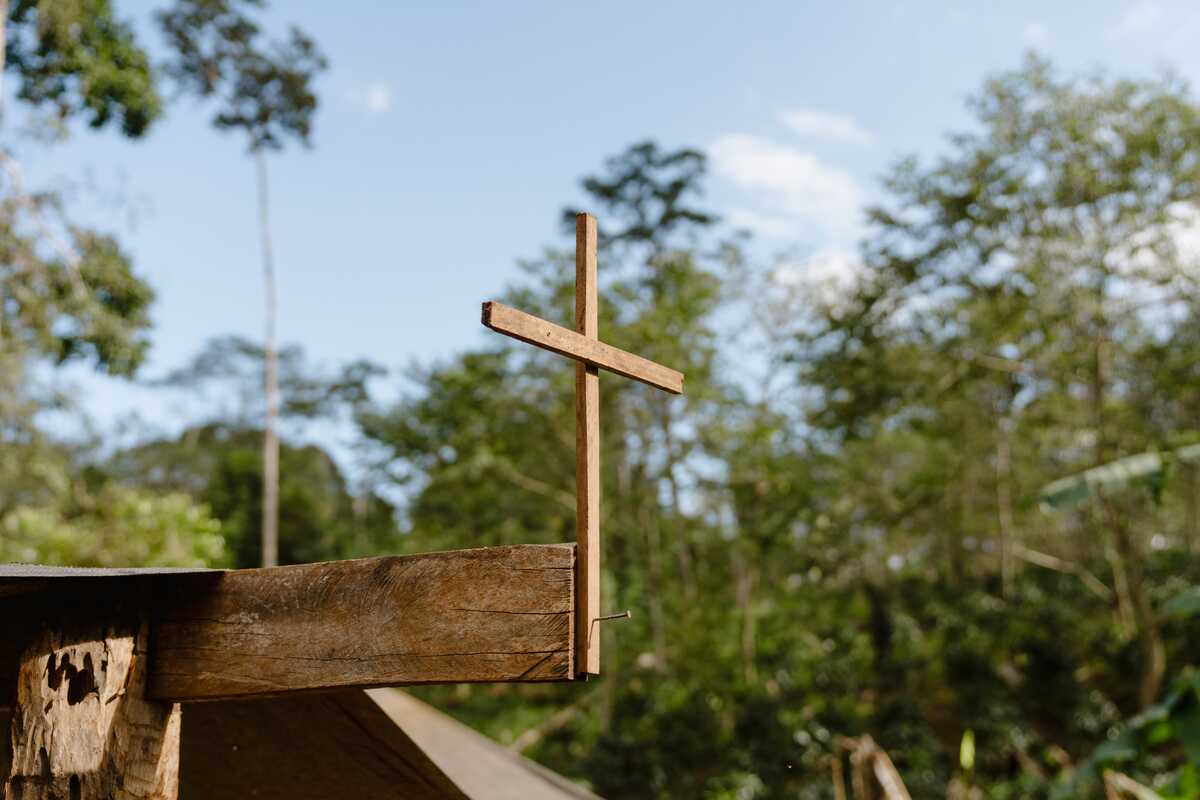
This is true for many underground churches in Laos. They are officially illegal because they are unregistered—there are only three groups permitted to register churches in the country, and every other group of believers is forced to worship in a legal gray area, operating only as long as the authorities don’t care to enforce the law. Additionally, in rural areas, local officials wield even more power and often respond to cultural or ethnic disputes by shutting down these unregistered churches or refusing to prosecute violent reprisals against Christian communities.
So this is the shaky reality faced by Kanya, Phonesay and the other believers worshiping and serving God faithfully in the middle of the forest. They treasure their time together—but they know it’s a fragile existence. They live their lives for Christ underground and under pressure.
Your gift
can help support Christians like Kanya and Phonesay who risk everything to follow Jesus. Will you help support them?
GIVE TODAY
That’s why we must step into the lives of persecuted believers and walk with them. When we stand with Christians like Kanya and Phonesay through our prayers, presence and support, God can use us to strengthen churches to persevere in their faith under increasing pressure.
The bold faith of this couple shows the resilience of faith even in this pressure cooker. “If we face trouble or problems, we must lean on God,” Kanya says. “Sometimes, it is His plan—or He wants to teach us. It is a way to train us to grow stronger. Through trials, we understand God more. We must be patient. God will not abandon us. If we want to serve Him, He knows our hearts.”
This is God’s work: strengthening His people to serve Him, even in the midst of pressure most of us can’t imagine. He’s growing His people—people like Kanya and Phonesay in Laos—and showing that, even forced underground, His Church will never be stamped out.
Will you join us in prayer?
- Please pray that the Lord will provide a better house so we can sleep comfortably,” Phonesay asks.
- Phonesay also asks: “Pray for my family to understand each other and serve the Lord together.”
- Kanya is dealing with sickness. Pray that she will be healed and that God would grant her desire to serve Him more.
- Kanya and Phonesay’s children aren’t able to attend school—please pray they will grow in knowledge, both in school subjects and in the Lord.
- Kanya asks: “Pray that whatever happens, I will stand firm and never deny Him. Pray that I will follow His Word and have strong faith in God.”
*Representative names used for security reasons.