You’re offline. This is a read only version of the page.
StorySyria | 26 May 2026
Faith and loss in Syria
Hear from a Syrian Christian whose father was killed but continues to help others.
Show: true / Country: Syria / Syria
The sun was hiding behind the buildings after a hot Sunday in June. Jenny sat with her friend outside her modest, two-room home in the Dweila neighborhood of Damascus.
She didn’t go to church that day because her friend was visiting. The two women sat and talked, enjoying the breeze in a respite from the summer heat.
And then around 6:30 that evening, Jenny and her friend heard the unmistakable sound of gunshots followed by an explosion.
Like most Syrians, Jenny is all too familiar with the sounds of war; the 14-year-long Syrian Civil War has marked the better part of her 25 years. “I heard the gunshots, but they weren’t near; less than a minute later, an explosion took place,” Jenny remembers. “Because the noise was very loud, it took us back to the time of the conflict 10 years ago.”
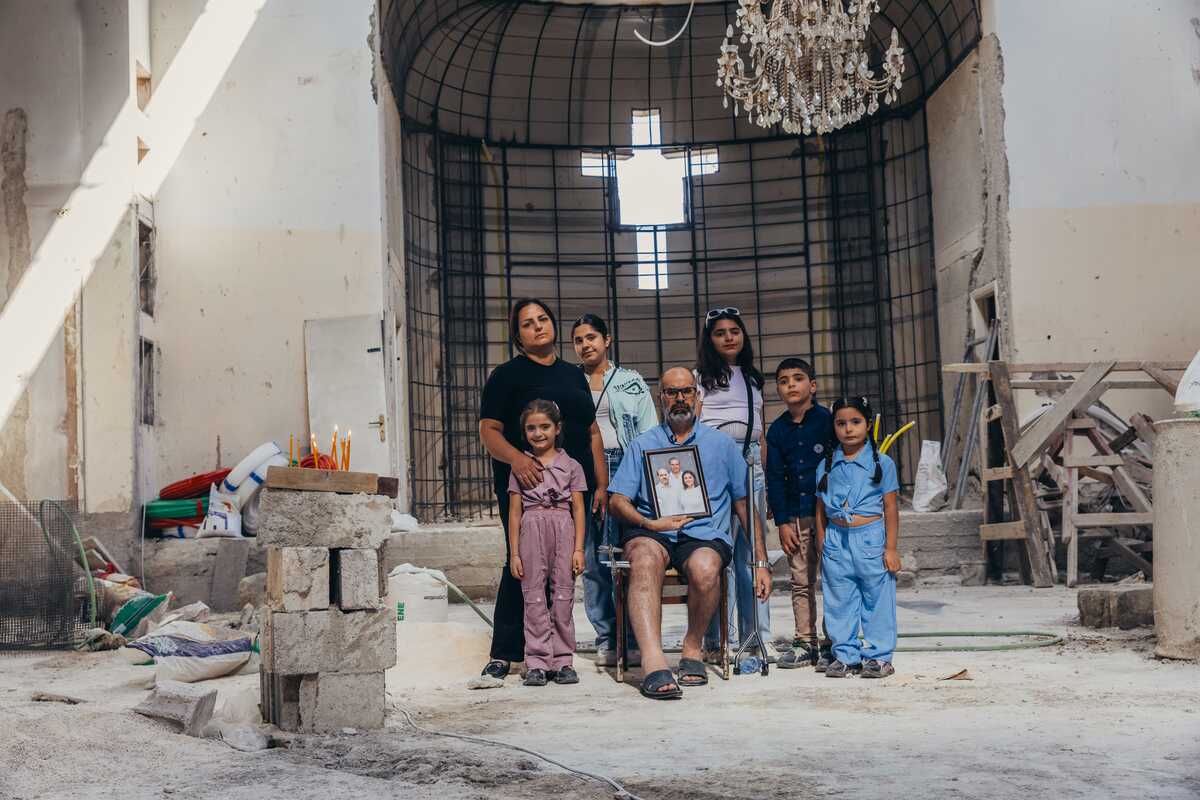
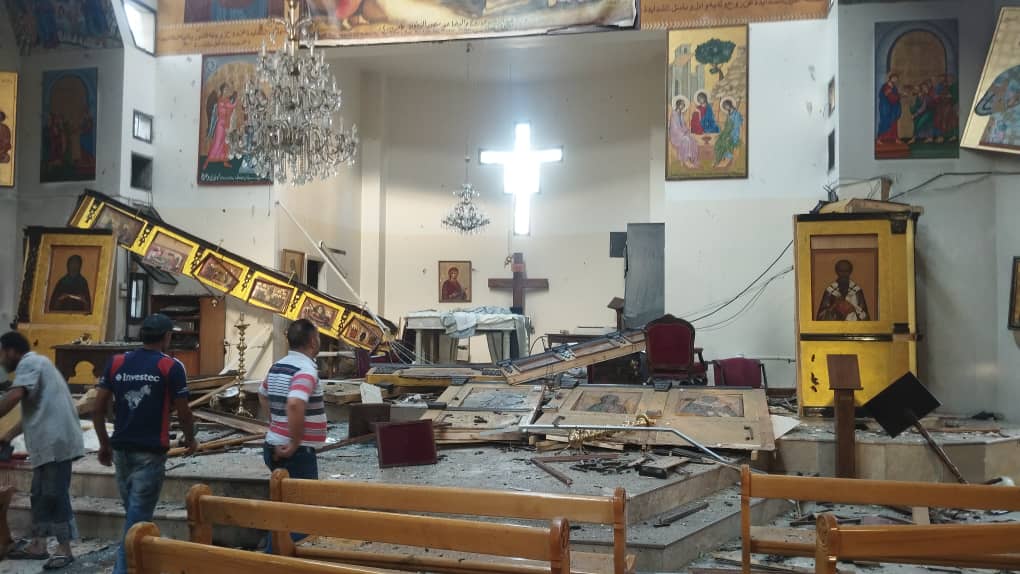
But the sounds they heard weren’t caused by war planes or a new insurgent group. What Jenny didn’t know at that point was that the explosion had struck Saint Elias Church where her father was attending evening services—the place she would have been if her friend hadn’t come.
A series of phone calls slowly led her to an unsettling realization. A friend phoned and informed the women that the explosion took place at the nearby St. Youssef church. Another friend called and said the bombing actually occurred in front of St. Elias. Jenny nervously tried to call her father.
Then came another call.
Jenny remembers, “The person told us that a suicide bomber detonated himself inside the St. Elias church, and that everyone inside died.”
‘It didn’t seem real’
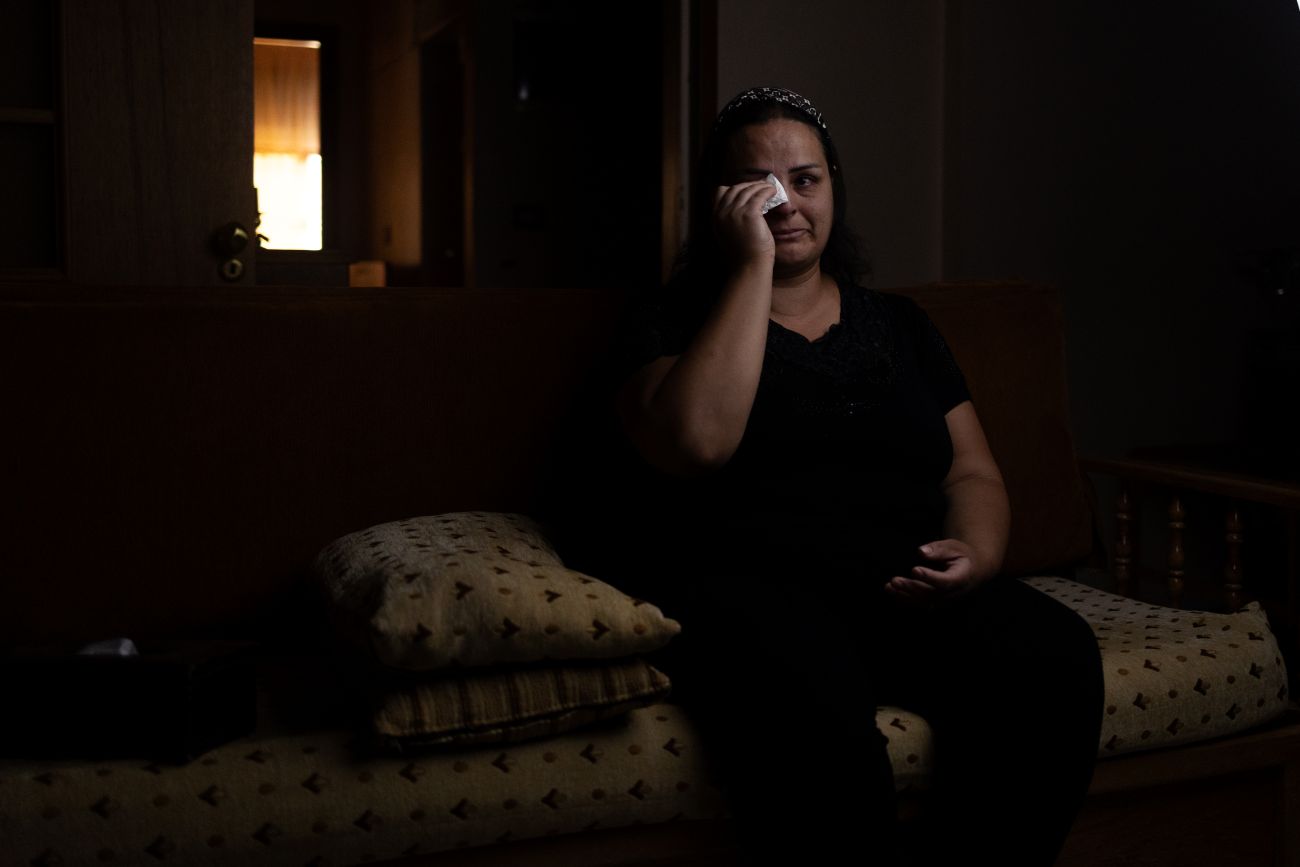
Jenny reeled at the news. “The first thing that went through my mind was that I needed to reach my father in any possible way because I knew he was attending mass there. I was shaking all over; I sat down because I couldn’t stand up.”
A series of frantic moments began. “I started calling my father,” Jenny says. “After [trying] three times, someone answered. The man on the other end said that he found the phone on the floor. He said he didn’t know if the owner was alive or dead.”
Jenny left her home, trying to find answers. “I had to get to the church [no matter what],” she says. “The road [there] seemed to be taking an eternity. It was one of the hardest moments. I reached the church and saw security forces surrounding the building; people were everywhere, some lying on the side of the street … some were screaming.”
“It was as if I were in a movie."
Jenny
Jenny met up with her sister, and the two women desperately began to search for their father.
One of her relatives said that he saw her father leaving the church. But Jenny worried she wasn’t getting the whole story. “I felt that [my relative] was hiding something,” she explains. “He didn’t look straight into my eyes. He said that my father was still alive, and the ambulance took him.”
Security forces told the crowd to leave, fearing another bomber might be hiding among the crowd.
Eventually, Jenny and her sister learned that their father was taken to the hospital in a taxi, not an ambulance. They also found out he had been severely injured in the bomb blast and needed urgent treatment.
‘I’ll never forget the scene’
She jumped on the back of a friend's motorbike, and the two of them went from hospital to hospital, searching for her father. Eventually, they found out where he had been taken. “My aunt’s husband and another uncle arrived before I did,” Jenny remembers. “They told me he was in surgery.”
Jenny could do nothing: “I sat there waiting and praying.”
Meanwhile, a family friend and one of Jenny’s aunts, who had both also been at the St. Elias church service, were declared dead at the same hospital. “It happened right in front of me,” Jenny recalls. “My aunt’s family cried and wailed. I’ll never forget the scene. I looked up and prayed, ‘Please Lord, I'm willing to care for [my father] for the rest of his life, so please don't let me experience what they did.’”
But soon the news came: Her father was dead.
When they heard that their father had died, the sisters broke down.
Jenny still doesn’t know why her father had to die, or why the attacker struck that June night. “I don’t know why [the attacker] did it,” she says. “Others might tell you they would assault or even kill him if they met him. I wouldn't; I would just ask him, ‘Why? I’m a person sitting in the church praying. I’m not fighting you nor causing you harm. I’m just praying, and you come to kill me in my church?’”
Grief and faith
They returned home, and soon people from the church came. Looking back, Jenny sees how God worked through her local church and the worldwide family of God. “We were shown affection by everyone, including all churches worldwide,” she says. “We knew that there were people who loved us, who shared our sadness, who were affected by what we had been through.”
In the aftermath of the attack, Jenny leaned on her faith. “Faith is present for sure,” she says. “I love the kind of relationship I have with God. I was confident that the persons killed were among the saints. My father was chosen by God. I believe that he is with Jesus.”
She describes her father as “my companion, my advisor, my shield and my safety."
“Our house lacks safety because he’s not there. We miss him a lot; the house is dark without him.”
Jenny
Jenny is one of the Syrians who graduated from the counselling school run by an Open Doors partner. “I was aware that I was experiencing the symptoms of trauma and post-traumatic stress, so I tried to help myself and get over what I was going through by using methods that would support me,” she says.
She used her training to work through not only her grief but also to help others in her community navigate their own grief. Open Doors recently began offering trauma counseling to traumatized Syrian Christians; Jenny also volunteers there as a counselor.
“It is important for me to help the people who went through the same experience as I did,” she says. “It is my duty to stand beside them and support them, just like I received support somewhere along the way.”
Your generosity
can help support Christians like Jenny who follow Jesus in difficult places. Will you help support them?
Jenny says she “cannot stop attending church” because “they have always been trying to persecute the church and terminate it. Christians are being persecuted all over the world, but the Lord is on our side. The Church will remain intact and unaffected by this incident; it will only be strengthened.”
With conviction, she continues: “God is all goodness. When we go to Him, we can’t find a better place. We need to be in our church. I hope the churches will go back to being full to the brim. We were damaged by what happened, but we returned to attending church.”
Jenny knows what she and other Syrian Christians need to continue. They need to be strengthened, so the remnant of Christians in Syria can live out their lives for Jesus.
“Prayers are what we need the most right now,” she explains. “We need divine help to get through what we are facing.”
Through your gifts and prayers, you support the counseling sessions and counselors like Jenny who help Syrian Christians heal and regain hope in the face of violence and despair.