You’re offline. This is a read only version of the page.

"We plead with God to have mercy on our nation. We ask for strength to endure."
This is a prayer from Edgar, a pastor in Cuba. His petition reflects a growing reality across the island. Food is scarce. Electricity fails. Medicine is limited. Water is unreliable. At the same time, pressure on religious communities is rising.
Together, these factors have pushed Cuba into a humanitarian crisis worse than in recent years. And as the crisis deepens, thousands of believers now cry out for support.
"I ask everyone to pray for my mother and me, because repression is constant."
Anna Sofía Benítez, Cuban believer and 20-year-old content creator
"If you have a cow in Cuba, you can't eat it," says a young woman in a recent video that went viral. "It belongs to the State. If you do, you go to jail."
For many outside Cuba, this might seem shocking. But for the millions on the island, it is part of their reality. Economic restrictions, inflation and energy shortages have worsened food access. The crisis is now more severe than the "Special Period" of the 1990s.
"We have nothing to eat. Everything is extremely expensive; it now costs twice as much," Edgar says.
Even basic items are limited. In some regions, bread is only available for children. The ration system is failing. For many families, three meals a day is no longer possible. According to the Cuban Observatory of Human Rights, seven in ten Cubans cannot afford it.
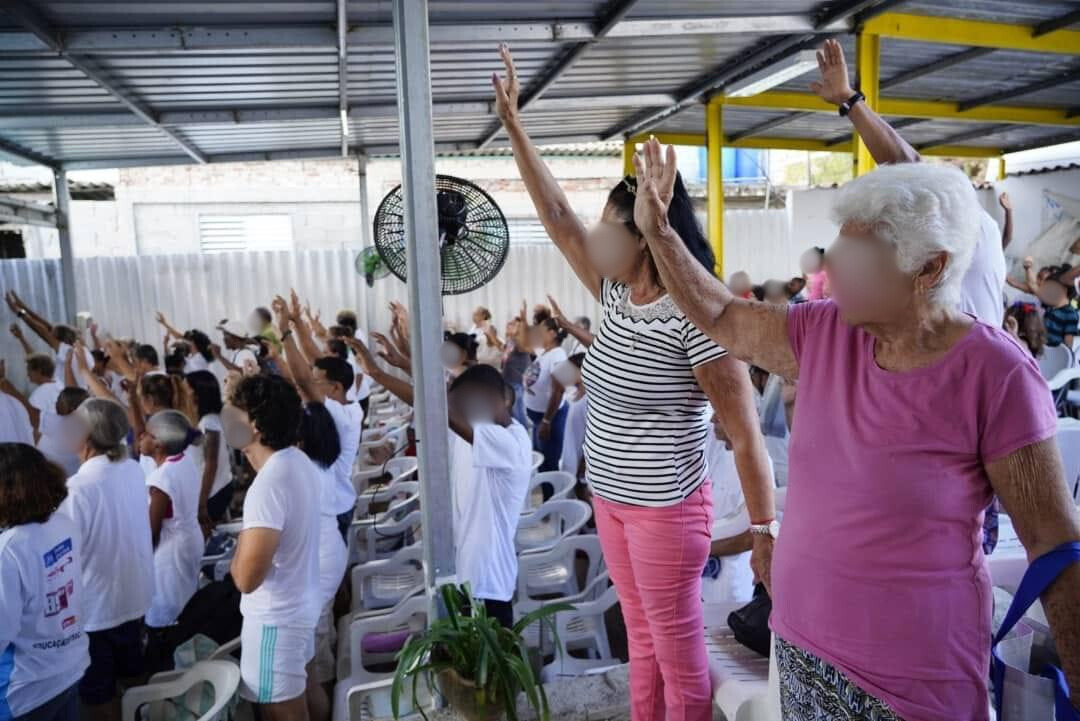
Churches are among the few places offering help. Despite limited resources, they share what they have. "Before the pandemic, some refused food [from our church]," Edgar says. "Now, everyone accepts it, because they have no other choice."
Medicine and basic goods are also scarce and very expensive. Many depend on money from relatives abroad, yet nearly 90% of households in Cuba live in poverty or extreme poverty.
Cuba's ongoing energy crisis affects every part of life. Since 2025, daily blackouts have lasted between 12 and 20 hours. Power outages also affect access to water and basic services, especially in rural areas.
"Electricity is out almost all day here. They turn it on for a few hours, but [it] is not enough," says Ferney*, another pastor. "We cook with firewood. It feels like we've gone back in time.
"Water comes only once every 15 days," he adds.
To make matters worse, authorities continue to monitor and punish those who speak out. In recent months, repression has increased, including against Christian leaders and their families.
The Cuban Observatory of Human Rights (OCDH) recorded over 200 repressive acts in March alone. Reports include threats, harassment, arbitrary arrests and surveillance.
For Luis, another Cuban church leader, this is daily life. Strangers watch his movements and track his messages. "They come to monitor what I say," he explains. "I feel watched all the time, even when I only speak about God."
Authorities are not just targeting church leaders—they've also begun to crack down on young Christians who have been speaking out.
After the massive protests against the regime in February and March, the government responded quickly. Sixteen-year-old Jonathan Muir and his father were detained on March 16 after responding to government summons. His father, Pastor Elier Muir Ávila, was released, but Jonathan remains in prison, accused of "sabotage."
Others face similar situations. Ernesto Ricardo Medina and Kamil Zayas Pérez, creators of the media project @el4atico, were detained on February 6 after sharing political analysis online. Authorities raided their home. They seized computers, phones and audiovisual equipment and detained both without formal charges.
Now Medina and Pérez remain jailed—without a trial date—and could face nine years in prison on charges of "propaganda against the constitutional order" and "incitement to commit a crime."
Anna Sofía Benítez, a 20-year-old content creator, was placed under house arrest after exposing threats against her mother. Weeks later, both reported hacked phones and disconnected telephone lines. "I ask everyone to pray for my mother and me, because repression is constant," she asks. "With our lines deactivated, we can't communicate."
She has already faced repeated surveillance and warnings from authorities.
Amid all of these devastating challenges, Cuban churches are crying out for help, asking the global Body of Christ to pray.
"Cuba needs change, but we do not expect it from the government—only God can do it," says Ferney. "[Even though] we lack everything, we keep trusting in God."
"Following Jesus in Cuba is already difficult, but the economic crisis has made it even harder," agrees Laura*, an Open Doors expert for Cuba. "The church continues working with the little they have to help families and nurture the faith. Please pray that God gives strength to the church each day, that families have the necessities they need, that the church continues to be a place of comfort, and that hope is not lost."
Pastors urge prayer for the nation: for strength to endure and for the situation to change soon for the better.
Here are some specific ways you can pray:
*Names changed for security reasons.